Collision Repair
Model Y Juniper Rear Bumper Removal & Tow Hitch Install
Model Y Juniper (2026) rear bumper removal, impact bar swap, and OEM tow hitch install — documented in 19 real workshop photos from a collision shop.
Practical repair guides, tool recommendations and real workshop stories for Model 3, Y, S and X.
Browse All Guides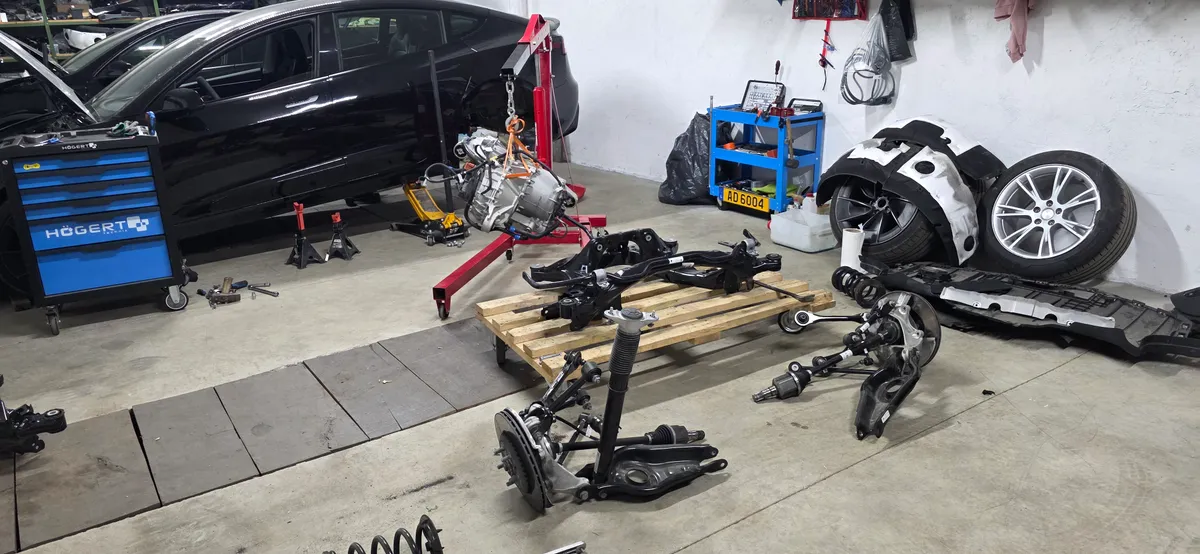
Record or upload a clunk, squeal, hum, or rattle. Sound Check analyzes it on your device and suggests explainable starting points from our repair library.
🔒 No account or VIN. Audio is not uploaded.
Step-by-step tutorials to fix your Tesla yourself
Model Y Juniper (2026) rear bumper removal, impact bar swap, and OEM tow hitch install — documented in 19 real workshop photos from a collision shop.
After airbag deployment, the Tesla RCM must be replaced and post-crash data cleared in Toolbox. A collision tech's walkthrough — order, safety, pitfalls.
Dashcam footage missing? Check recording versus saving, manual clips, encrypted files and storage errors before formatting or replacing your Tesla USB drive.
Tesla door handle stuck, not presenting, or frozen? 2026 DIY fix for Model S, X, 3, and Y. Save $400–800 with step-by-step instructions and entry tips.
Tesla MCU1 to MCU2 upgrade — worth $1,500+? Costs, DIY eMMC repair ($50), yellow-border fixes, MCU3 AMD Ryzen specs, and exactly who should upgrade in 2026.
Tesla trunk or liftgate won't close? Fix latch issues, reset sensors, adjust the striker, and troubleshoot power trunk problems on Model 3, Y, S & X.
Find a starting point for troubleshooting your Tesla
Check the update stage and connection, and learn when to contact Tesla.
Start with the USB port, storage drive and recording settings.
Understand safe checks and how to document unexpected braking for service.
Narrow down where a creak or rattle comes from before choosing a repair.
Explore USB storage and recording settings for Dashcam and Sentry Mode.
Investigate location, map and navigation problems.
Start with the symptom, check the guidance for your exact model and decide whether the work is within your experience. Our guides bring together troubleshooting information and experience from an independent Tesla workshop. Meet the mechanic and learn about the workshop →
Repair procedures vary by vehicle configuration. Brakes, high-voltage systems and collision damage can require professional inspection and specialist equipment.
Low-voltage batteries, wiring and electrical diagnostics.
Brakes, suspension components, steering and drivetrain symptoms.
Cabin filters, heating, air conditioning and cooling systems.
Lights, glass, body panels and exterior trim.
Updates, screens, navigation, cameras and recording features.
Charging ports, cables, home charging and Supercharging.
Routine checks, tires, wheels, wipers and washers.
Seats, door controls, speakers and cabin trim.